
Market Trends
The national housing market continues to show a curious mix of softening demand and rising prices. Existing-home sales dropped 2.7% in June, continuing a national slowdown in buyer activity. Instead of prices falling with demand, however, the median home price reached a new high of $435,300 - a 2% increase from the same time last year.
This disconnect largely comes down to inventory and affordability. Many homeowners locked into low interest rates are holding off on selling, keeping supply tight. At the same time, buyers are pulling back, frustrated by borrowing costs and limited choices.
While many expected prices to cool as demand softened, the ongoing inventory shortage created a kind of standoff. Fewer buyers and fewer sellers are keeping prices elevated even as the pace of sales slows.
It is important to remember that real estate is highly local. If you are curious how national trends compare with what we are seeing in Wake County, I would be happy to break that down. The market varies not just from state to state, but from city to city and neighborhood to neighborhood.
Recap
- Nationally, existing-home sales fell 2.7% in June, reaching the lowest level since September 2024.
- The median home price rose to $435,300, a new record and a 2% year-over-year increase.
- Buyer activity remains sluggish because of elevated mortgage rates and limited inventory.
- Sellers are staying put, contributing to the supply shortage.
- The result is a stalled market - high prices despite softer demand.
Interest Rates
Mortgage rates eased slightly, offering some - but not much - relief for homebuyers while affordability remains a challenge. The average 30-year fixed mortgage rate dropped to 6.72% for the week ending July 31, 2025, down from 6.74% one week earlier.
While the pullback is modest, it helps offset rising home prices. The decline came as the Federal Reserve held its benchmark rate steady at 4.25%–4.50%. That decision, combined with softening bond yields, is keeping mortgage rates stable but elevated.
Economists expect rates to stay above 6% for the foreseeable future. Some forecasts predict they may slide toward 6.4% by year-end, with further easing possible in 2026 - but significant relief may still be months away.
According to economists at the National Association of REALTORS®, a 30-year fixed mortgage rate of 6% would make the median-priced home affordable to nearly 5.5 million additional households, including 1.6 million renters. If rates reach that threshold, an estimated 10% of those households - about 550,000 - could purchase a home within the next 12 to 18 months.
Clever Home, Clever Idea: Undercabinet Lighting
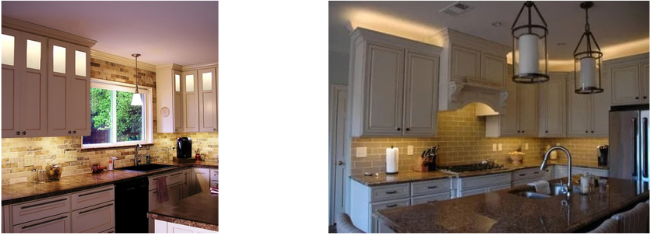
If you are looking to elevate any space, undercabinet lighting is one feature you do not want to overlook. It is a small detail that creates a big impact, both functionally and visually.
Undercabinet lighting is not only about brightening countertops, though it certainly helps. It also sets the mood. In the evening, a soft, dimmable glow adds warmth and ambience that makes a kitchen feel calm, inviting, and high-end - a nightlight for grown-ups.
If you are in the middle of a kitchen remodel, hardwired LED strips or puck lights should be on the electrician’s list. Built-in lighting provides seamless control through a wall switch or smart dimmer, and low-profile fixtures are nearly invisible after installation. You will not regret having soft, layered lighting built into the space.
Even without replacing cabinets, rechargeable LED options can add undercabinet lighting. These modern fixtures attach magnetically or with adhesive, and many include motion sensors, timers, and dimming features. No electrician is required - charge them and enjoy the upgrade.